

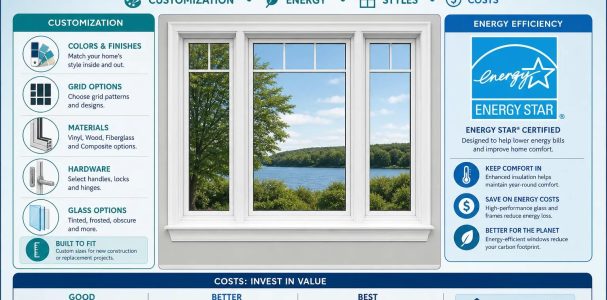
Windows: A Practical Guide to Custom Installation, Energy Efficiency, Styles, and Costs
By Kevin Greer, Diamond Construction
Windows do more than let light into your home — they shape its look, influence comfort, and affect utility bills. This guide walks you through what matters most: custom installation options, energy-saving choices, common styles, and realistic costs. Choosing the right windows can be confusing. With clear information about custom fits and energy performance, you’ll be better equipped to make decisions that match your design goals and budget.
What Are the Benefits of Custom Window Installation?
Custom window installation gives you a tailored fit and finish that standard units often can’t match. By sizing and styling windows to your home’s specific architecture, you get cleaner sightlines, fewer gaps that invite drafts, and improved insulation. Custom work also lets you pursue unique features — larger openings for daylight, specialty frames to match trim, or materials chosen for both looks and longevity.
Specialist firms that focus on custom windows bring craftsmanship and attention to detail. They prioritize quality and energy performance, delivering installations that align with both aesthetic and efficiency goals for homeowners across different regions.
How Does Custom Installation Enhance Home Design and Functionality?
Custom installation helps maintain a consistent design language across the house. You can pick materials and profiles that complement existing architectural elements, create smooth transitions between rooms, and expand openings to invite more natural light. These design choices don’t just look better — they make rooms feel larger, more comfortable, and more usable.
Which Window Frame Materials Are Best for Custom Installations?
Choosing the right frame material is key for custom work. Common options include vinyl, wood, and aluminum — each with trade-offs. Vinyl is low maintenance and performs well for energy efficiency. Wood delivers timeless appeal and strong insulating properties but needs regular upkeep. Aluminum offers a sleek, modern look and high customizability, though it typically insulates less effectively than vinyl or wood. Weigh these pros and cons against your design priorities and long-term maintenance plans.
How to Choose Energy Efficient Window Options for Your Home?
Selecting energy-efficient windows reduces heating and cooling costs while improving indoor comfort year-round. These windows are built to limit heat transfer so your home stays warmer in winter and cooler in summer. Look for products with solid performance ratings and consider how frame materials and glazing options influence overall efficiency.
What Are Energy Star Ratings and Their Importance?
Energy Star ratings are a reliable indicator of a window’s energy performance. Windows that earn this label have passed standardized testing for insulation and heat control. Choosing high-rated windows can lower energy bills and reduce your home’s environmental footprint. Always check for these ratings when comparing products to ensure you get measurable savings.
How Do Different Window Materials Impact Energy Efficiency?
Frame and glazing materials directly affect thermal performance. Vinyl frames generally offer good insulation and resist temperature transfer better than aluminum. Wood performs well thermally but requires more maintenance to preserve its insulating qualities. Consider each material’s R-value (or U-factor), expected upkeep, and environmental impact when making your choice.
What Are the Typical Costs Involved in Window Replacement?
Window replacement costs vary by style, material, and installation complexity. On average, homeowners should budget between $300 to $1,000 per window, depending on those factors. Include both the unit price and installation fees in your budget to avoid surprises.
This table shows typical costs by style and how installation complexity can affect final pricing. Use it as a general reference when planning your project.
How Do Window Styles Affect Replacement Costs?
Style influences both material needs and labor. Casement and double-hung windows often land in the moderate price range, while sliding windows can cost more because of heavier frames and more complex tracks. Material choice also shifts cost: vinyl tends to be more budget-friendly, while wood and custom aluminum options usually raise the price tag.
What Warranty and Maintenance Should You Expect?
Most reputable manufacturers offer warranties from about 10 to 20 years for defects in materials and workmanship. Maintenance varies by material: wood typically needs periodic sealing or painting, while vinyl is mostly maintenance-free. Clarify warranty terms and routine care requirements before you buy to protect your investment.
Which Window Styles Are Best Suited for Modern Homes?
Modern homes often favor clean lines and expansive sightlines. Casement, double-hung, and sliding windows are popular choices because each balances function with contemporary aesthetics. Pick a style that supports your design vision while delivering the ventilation and ease of use you need.
What Are the Features of Casement, Double Hung, and Sliding Windows?
Casement windows hinge outward, offering excellent ventilation and unobstructed views. Double-hung windows have two operable sashes for flexible airflow and easy cleaning. Sliding windows operate on a horizontal track and are ideal where outward opening isn’t practical. Each type has clear advantages depending on location and use.
How to Select Window Styles That Complement Remodeling Projects?
When remodeling, consider how new windows will harmonize with existing architecture. Coordinate color, material, and proportion so the windows feel integrated rather than added on. Consulting with a contractor or designer helps ensure your choices support both the look and function of the remodeled spaces.
How Does Window Replacement Integrate with Home Remodeling?
Window replacement often pairs naturally with broader remodeling work, improving both appearance and performance. Coordinating these tasks can streamline scheduling and keep design choices consistent across the project.
What Are the Benefits of Coordinated Window and Remodeling Projects?
Coordinated projects can save time and money. Bundling window replacement with other renovations reduces repeat site visits and can lower labor costs. It also ensures material and finish choices align across the scope of work for a unified final result.
How to Plan Window Installation Within Remodeling Timelines?
Plan closely with your contractor to set a realistic timeline that accounts for ordering lead times and installation sequencing. Clear communication about delivery dates, site access, and protection of finished areas helps avoid delays and keeps the remodel on track.
What Are the Advantages of Vinyl Windows Compared to Other Materials?
Vinyl windows are popular because they combine durability, good energy performance, and low maintenance. For homeowners seeking value and long-term ease of care, vinyl is often the practical choice.
Why Are Vinyl Windows Popular for Energy Efficiency and Durability?
Vinyl resists moisture, rot, and insect damage while providing solid insulation that helps reduce heating and cooling loads. Because vinyl doesn’t require painting or staining, it also reduces long-term maintenance work.
How Do Vinyl Windows Compare in Cost and Maintenance?
Vinyl usually costs less upfront than wood or high-end aluminum and tends to need less upkeep, making it a cost-effective long-term option. Compare lifecycle costs and local climate performance to determine if vinyl is the right fit for your project.
Performance Evaluation of Vinyl Replacement Windows: Cost and Energy Savings
Studies examining replacement windows made from polyvinyl chloride compounds evaluated their energy-saving potential and overall performance. Researchers presented life-cycle costing methods and a mathematical model to compare window options, noting that conclusions depend heavily on project-specific factors. The main considerations when choosing windows include installed cost, air infiltration, and maintenance. Interestingly, the study found that a window’s U-value (thermal transmittance) had a relatively small effect on the overall economic outcome in many cases.
Performance Evaluation of Vinyl Replacement Windows., 1980